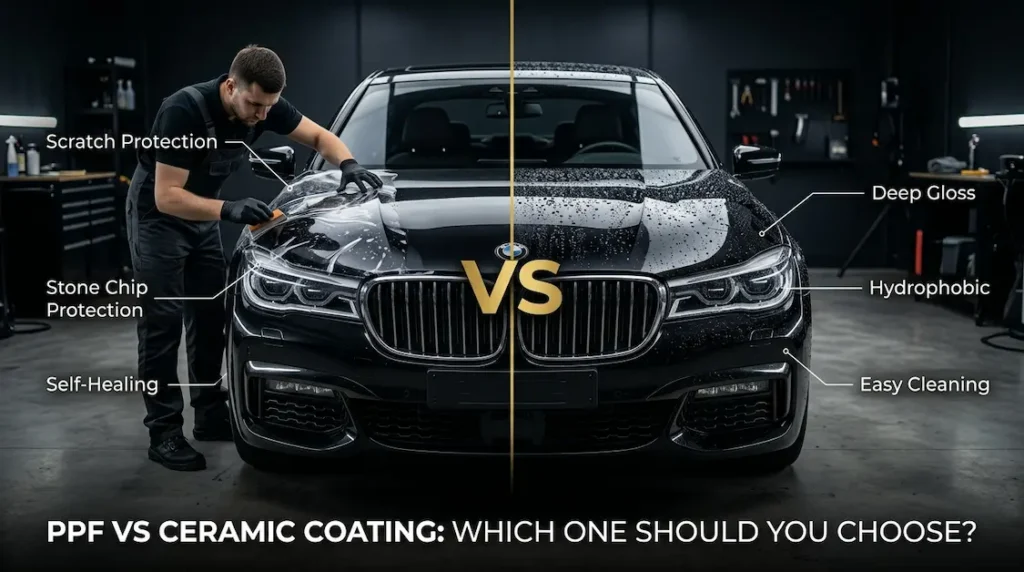
Confused between PPF and Ceramic Coating? This guide compares their protection, benefits, costs, lifespan, and maintenance to help you choose the right option for your vehicle. Learn which solution is best for your driving style, budget, and Pakistan’s road conditions, with expert insights from Nanolex Car Care.
Buying a car is one of the biggest investments most people make. Whether you own a brand-new sedan, a luxury SUV, or a daily commuter, keeping the paint in perfect condition is always a priority. This is why PPF vs Ceramic Coating: Which One Should You Choose? has become one of the most searched questions among car owners in Pakistan.
Both PPF vs Ceramic Coating are popular Car Paint Protection solutions, but they work in completely different ways. Many people assume they offer the same level of protection, but that is not true.
One creates a strong Physical Barrier against stone chips and scratches, while the other forms a durable Protective Coating that enhances gloss, repels water, and makes maintenance easier.
If you choose the wrong option, you could either spend more money than necessary or fail to protect your vehicle from Pakistan’s challenging road and weather conditions. Dust, UV Rays, Road Grime, Bird Droppings, Tree Sap, Bug Splatter, Water Spots, and flying Stone Chips can all reduce the beauty and value of your car over time.
In this detailed guide, you’ll learn everything about Paint Protection Film vs Ceramic Coating, including how each system works, their advantages, disadvantages, costs, durability, maintenance requirements, and which one is the best choice for different types of drivers. Whether you own a new Corolla, Civic, Sportage, BMW, Mercedes-Benz, Audi, or Land Cruiser, this guide will help you make an informed decision.
At Nanolex Car Care, we regularly help vehicle owners choose the right Vehicle Paint Protection based on their driving habits, budget, and long-term goals. Instead of recommending one solution for everyone, the best approach is selecting the protection system that matches your vehicle’s needs.
By the end of this guide, you’ll clearly understand whether PPF or Ceramic Coating is the better investment for your car.
This detailed PPF vs Ceramic Coating comparison will help you understand which paint protection solution is better for your vehicle.
Expert Tip
If you mainly drive on highways, protecting high-impact areas with PPF is usually a smarter investment than relying only on ceramic coating. However, if your vehicle is mostly used for city driving, a professional ceramic coating may provide the protection and easy maintenance you need at a lower cost.
What is Car Paint Protection?
Modern vehicles come with a factory Clear Coat that protects the coloured paint underneath. Although this Clear Coat Protection helps preserve the finish, it is still vulnerable to daily wear and tear.
Every day, your car faces different threats, including:
- Flying Road Debris
- Rock Chips
- Minor accidents
- UV Protection challenges caused by harsh sunlight
- Oxidation
- Acid Rain
- Bird Droppings
- Tree Sap
- Bug Splatter
- Water Spots
- Dust and pollution
- Improper washing that creates Swirl Marks
Over time, these contaminants reduce your vehicle’s shine and damage the original finish.
This is why professional Automotive Paint Protection has become an essential investment for anyone who wants to preserve their vehicle’s appearance and resale value.
Professional detailing practices focus on proper surface preparation, product knowledge, and correct application techniques. Industry organisations such as the International Detailing Association (IDA) provide education and resources that help improve professional detailing standards worldwide.
Today, the two most effective Paint Protection Solutions are:
- Paint Protection Film (PPF)
- Ceramic Coating
Although both are designed to protect your vehicle, they work in very different ways.
What is Paint Protection Film (PPF)?
Paint Protection Film, commonly known as PPF, is a transparent Polyurethane Film or Thermoplastic Urethane (TPU Film) that is installed directly over your vehicle’s painted surfaces.
It is often referred to as Clear Bra because it was originally developed to protect the front portion of vehicles from damage caused by road debris.
Unlike liquid coatings, PPF is a thick Protective Film that acts as a Sacrificial Layer, absorbing impacts before they reach your car’s original paint.
High-quality Self-Healing Film uses advanced Self-Healing Technology, allowing light scratches and swirl marks to disappear when exposed to sunlight or warm water.
Professional PPF Installation requires trained technicians because the film must be precisely cut and carefully applied without bubbles, dust, or lifting edges. A properly installed Professional PPF Installation provides seamless coverage and long-lasting protection.
Common Areas Protected by PPF
- Front Bumper
- Hood
- Side Mirrors
- Headlights
- Fog Lights
- Rocker Panels
- Door Edges
- Door Cups
- High-Impact Areas
- Full Front Coverage
- Partial PPF
- Full-Body PPF
For vehicles that frequently travel on highways, Full-Body PPF offers the highest level of Physical Impact Protection against stone chips and road debris.
Key Benefits of Paint Protection Film (PPF)
Some of the biggest advantages of Paint Protection Film include:
- Excellent Scratch Resistance
- Outstanding protection against Stone Chips
- Strong defence against Road Debris
- Advanced Self-Healing Property
- Protection from Physical Damage
- Shields against UV Rays
- Helps preserve the vehicle’s Original Paint
- Maintains long-term Vehicle Value
- Reduces paint repair costs
- Ideal for Luxury Vehicle Protection
- Excellent choice for New Car Protection
For owners of premium vehicles such as BMW, Mercedes-Benz, Audi, and Land Cruiser, PPF is often considered the gold standard for long-term Vehicle Protection.
“When comparing PPF vs Ceramic Coating, PPF remains the better choice for drivers who need maximum physical protection against road damage.”
What is Ceramic Coating?
Unlike Paint Protection Film, Ceramic Coating is not a film. Instead, it is a liquid Protective Coating made using advanced Ceramic Nanotechnology.
Most professional ceramic coatings are formulated using Silicon Dioxide (SiO2), while some premium products also contain Titanium Dioxide (TiO2) or modern Graphene Coating technology for improved durability and water repellency.
After professional application, the liquid coating forms a strong Chemical Bond and Molecular Bond with your vehicle’s factory Clearcoat, creating a durable Protective Layer over the paint surface.
Unlike waxes or sealants, Ceramic Coating is considered a Semi-Permanent Coating that can provide years of protection when properly maintained.
It does not stop deep scratches or stone chips, but it significantly improves Surface Protection, enhances gloss, and makes cleaning much easier.
How Does Ceramic Coating Work?
Professional Ceramic Coating Services begin with thorough Surface Preparation to ensure maximum bonding.
The preparation process usually includes:
- Complete vehicle wash using pH-Balanced Shampoo
- Clay Bar Decontamination
- Detailed Paint Inspection
- Paint Correction (if necessary)
- Car Polishing
- Removal of oils and contaminants
- Professional application of the ceramic coating
Once cured, the coating forms a hard Hydrophobic Layer over the paint.
This protective layer delivers several important benefits:
- Excellent Water Repellency
- Strong Hydrophobic Properties
- Better Gloss Enhancement
- Rich Colour Depth
- High Mirror Finish
- Enhanced Paint Shine
- Easier removal of dirt
- Reduced Water Spots
- Improved Easy Cleaning
- Lower maintenance requirements
- Better resistance against Environmental Contaminants
Because dirt cannot stick easily to the coated surface, maintaining the vehicle becomes much simpler.
Many car owners choose Professional Ceramic Coating because it improves the vehicle’s appearance while helping preserve the factory finish for years.
“In the PPF vs Ceramic Coating comparison, Ceramic Coating is ideal for vehicle owners who want better gloss, easier maintenance, and long-lasting paint enhancement.”
Why This Comparison Matters in Pakistan?
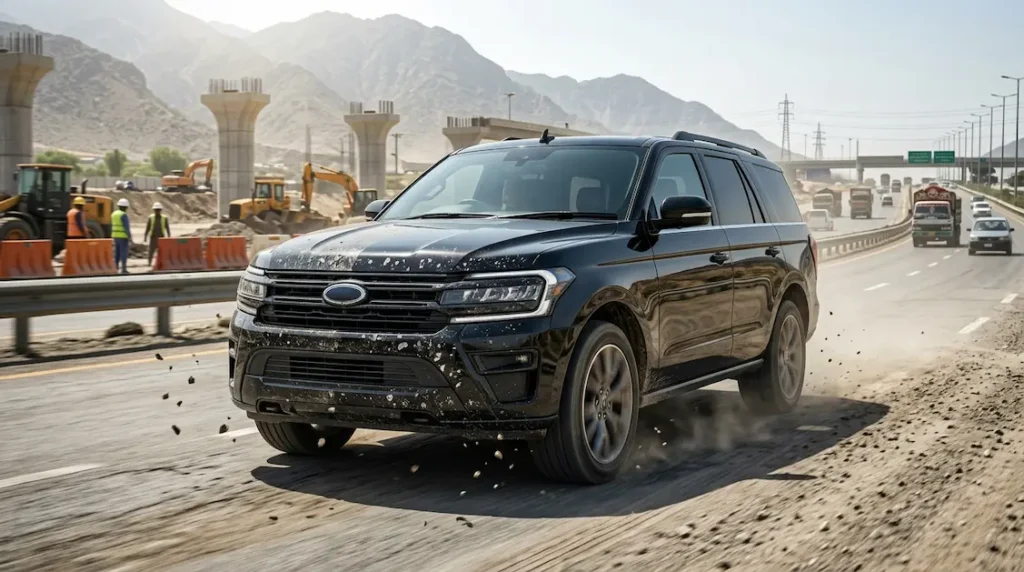
Pakistan’s driving conditions are very different from many other countries. Frequent dust, intense summer heat, strong sunlight, motorway driving, loose gravel, and inconsistent road conditions all affect your vehicle’s paint.
This is why choosing between PPF vs Ceramic Coating isn’t simply about price—it’s about selecting the right level of Long-Term Protection for your driving style.
At Nanolex Car Care, we recommend evaluating factors such as where you drive, how often you wash your vehicle, your budget, and the type of protection you expect before deciding between Paint Protection Film vs Ceramic Coating.
In the next section, we’ll compare both options side by side to help you determine which solution is the better investment for your specific needs.
PPF vs Ceramic Coating Comparison: What’s the Real Difference?
Many people believe PPF vs Ceramic Coating is simply a choice between two products that do the same job. In reality, they are designed for different purposes and provide different levels of protection.
The biggest Difference Between PPF and Ceramic Coating is that Paint Protection Film creates a thick Physical Barrier over your vehicle’s paint, while Ceramic Coating creates a thin Protective Coating that chemically bonds with the paint surface.
If your goal is to protect your car from Stone Chips, Road Debris, and physical impacts, PPF is the stronger option. If your priority is a glossy finish, easier washing, and long-lasting protection from environmental contaminants, Ceramic Coating is an excellent choice.
Understanding these differences will help you choose the right Paint Protection Solution for your vehicle.
PPF vs Ceramic Coating: Quick Comparison Table
| Feature | Paint Protection Film (PPF) | Ceramic Coating |
| Protection Type | Thick Protective Film | Liquid Protective Coating |
| Material | Thermoplastic Urethane (TPU Film) | Silicon Dioxide (SiO2) or Titanium Dioxide (TiO2) |
| Main Purpose | Physical Protection | Chemical Protection |
| Scratch Protection | Excellent against Light Scratches and many Minor Scratches | Helps reduce Swirl Marks but cannot stop deep scratches |
| Stone Chip Protection | Excellent | Very Limited |
| Self-Healing | Premium films include Self-Healing Technology | No |
| UV Protection | Excellent | Excellent |
| Water Repellency | Good | Outstanding Hydrophobic Coating |
| Paint Gloss | Good | Excellent Deep Gloss |
| Easy Cleaning | Very Good | Excellent |
| Lifespan | 5–10 Years | 2–7 Years |
| Best For | New & Luxury Cars | Daily Drivers & Easy Maintenance |
How Does Paint Protection Film (PPF) Protect Your Car?
Unlike coatings, Paint Protection Film is a thick transparent Polyurethane Film installed over the vehicle’s paint.
Think of it as an invisible shield.
Whenever small stones hit your car during Highway Driving, they strike the film instead of your original paint.
Instead of damaging the paint, the impact is absorbed by the film’s flexible structure.
Premium Self-Healing Film can even repair Surface Scratches automatically when exposed to heat.
This makes Professional PPF Installation one of the most effective forms of Automotive Paint Protection available today.
PPF Protects Against
- Rock Chips
- Stone Chips
- Road Debris
- Physical Damage
- Light Scratches
- Minor Scratches
- UV Rays
- Bird Droppings
- Tree Sap
- Bug Splatter
- Road Grime
- Oxidation
Because it acts as a Sacrificial Layer, your original paint remains protected underneath.
How Does Ceramic Coating Protect Your Car?
Unlike PPF, Ceramic Coating does not add a thick layer over the paint.
Instead, it uses advanced Ceramic Nanotechnology to form a permanent Chemical Bond with the vehicle’s Clear Coat.
This creates a smooth Hydrophobic Layer that repels water, dirt, and contaminants.
Instead of sticking to the paint, dust and water slide off much more easily.
This makes washing quicker while reducing the chances of creating Swirl Marks during cleaning.
Professional Ceramic Coating Services also improve:
- Paint Gloss
- Mirror Finish
- Gloss Enhancement
- Colour Depth
- Paint Appearance
- Easy Maintenance
- Long-Term Protection
Although it is extremely durable, it should not be considered a replacement for PPF if your vehicle regularly faces flying stones or physical impacts.
Understanding the difference between PPF vs Ceramic Coating is important before investing in professional car protection.
Which Offers Better Scratch Protection?
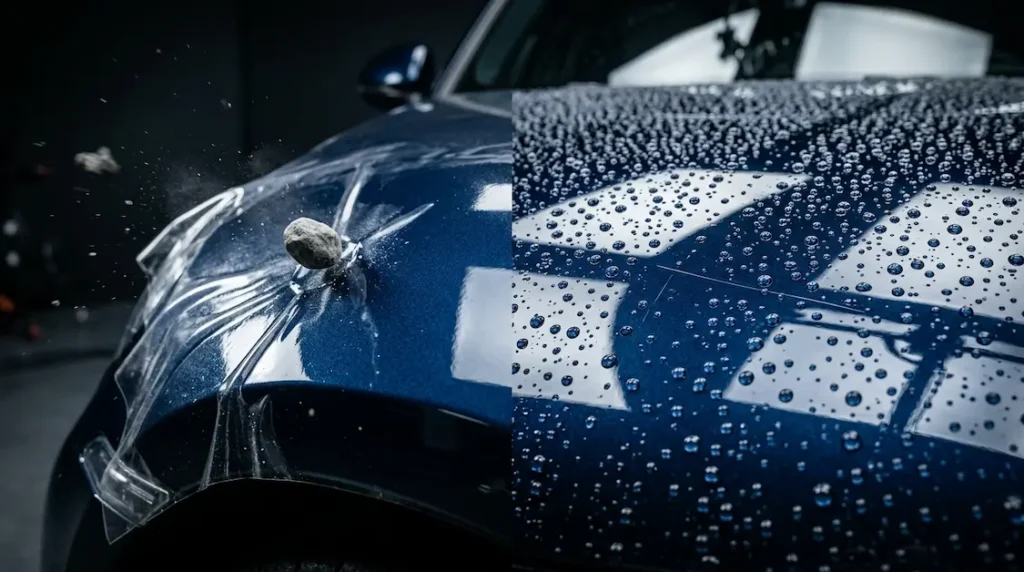
This is one of the most common questions people ask when comparing Ceramic Coating vs PPF.
The answer depends on the type of scratches.
PPF
Excellent against:
- Surface Scratches
- Light Scratches
- Minor Scratches
- Shopping trolley marks
- Door scratches
- Road debris
Premium Self-Healing Property allows many light scratches to disappear after exposure to heat.
Ceramic Coating
Good for:
- Reducing washing marks
- Lowering the risk of Swirl Marks
- Protecting against chemicals
However, Does Ceramic Coating Prevent Scratches?
The honest answer is No.
It can reduce very light marring but it cannot stop keys, sharp objects, or Stone Chips from damaging your paint.
Which Looks Better?
If appearance is your highest priority, Ceramic Coating usually delivers a richer finish.
It enhances:
- Deep Gloss
- High Gloss
- Mirror Finish
- Gloss Finish
- Paint Shine
- Colour Depth
- Paint Enhancement
This gives your vehicle a freshly polished showroom look.
Modern PPF has also improved significantly.
High-quality films now offer excellent clarity, making them almost invisible after installation.
Some premium films even provide a glossy finish similar to ceramic coatings.
Which is Better for Different Types of Drivers?
Choosing between PPF vs Ceramic Coating depends on how and where you drive your vehicle. Different drivers have different priorities, whether it’s maximum protection, easier maintenance, or preserving a luxury car’s factory finish. Here’s which option suits different types of car owners.
New Car Owners
A new vehicle deserves immediate protection before daily driving causes permanent damage.
For expensive vehicles, Full-Body PPF offers maximum New Car Protection.
If your budget is limited, Full Front Coverage combined with Professional Ceramic Coating is an excellent alternative.
Luxury Car Owners
Luxury vehicles usually have expensive paint finishes.
Replacing or repainting original panels can cost far more than installing PPF.
For BMW, Mercedes-Benz, Audi, Land Cruiser, and similar vehicles, Professional PPF Installation is generally the preferred choice.
Daily Drivers
If you mainly drive within the city and want easier maintenance, Professional Ceramic Coating provides outstanding value.
Its Hydrophobic Finish makes washing easier while helping maintain a cleaner appearance between washes.
Car Enthusiasts
If you enjoy detailing and want the best possible finish, combining PPF on High-Impact Areas with Ceramic Coating over the entire vehicle provides Layered Protection and the best balance of appearance and durability.
Advantages and Disadvantages of PPF vs Ceramic Coating
Understanding the advantages and limitations of PPF vs Ceramic Coating helps vehicle owners select the right protection system.
Now that you understand the basic difference between PPF vs Ceramic Coating, the next step is to compare their real-world benefits and limitations. Every vehicle owner has different needs. Some people want maximum Physical Protection, while others care more about Paint Gloss, Easy Maintenance, or affordability.
There is no single solution that is perfect for everyone. The best choice depends on your budget, driving habits, and the level of Vehicle Protection you expect.
Benefits of Paint Protection Film (PPF)
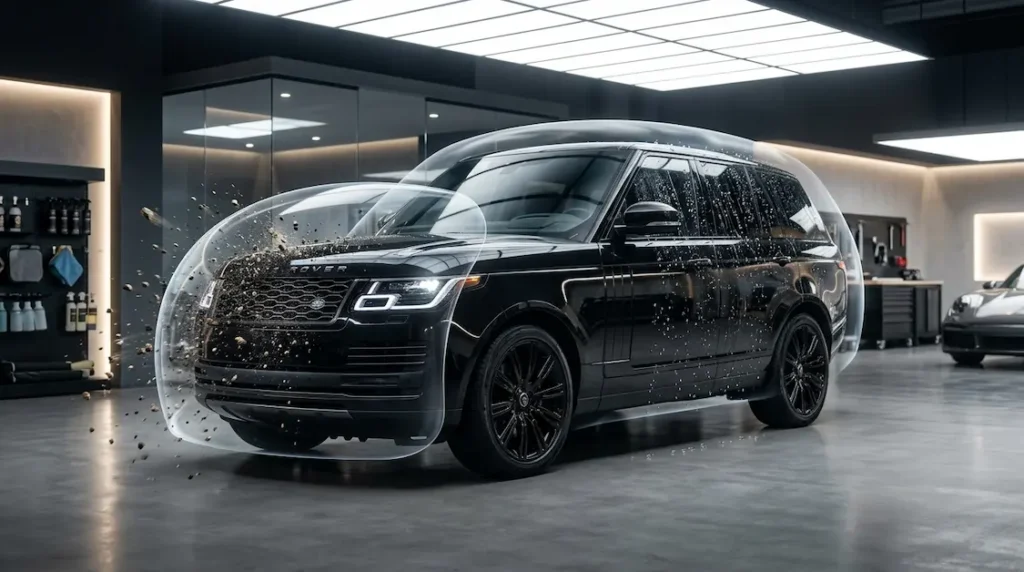
Paint Protection Film (PPF) is widely considered the highest level of Professional Paint Protection because it creates a thick Protective Layer over your vehicle’s paint. Instead of simply improving the appearance, it acts as a Physical Barrier against everyday damage.
1. Superior Protection Against Stone Chips
One of the biggest reasons people choose PPF is its ability to stop Rock Chips and Stone Chips. During Highway Driving, loose gravel and Road Debris can hit your car at high speed. Without protection, these impacts can chip the paint and expose the metal underneath.
A professionally installed Paint Protection Film absorbs these impacts before they reach your Original Paint, helping preserve your car’s factory finish.
2. Self-Healing Technology
Premium TPU Film comes with advanced Self-Healing Technology.
This means many Light Scratches, Surface Scratches, and Minor Scratches disappear automatically when the film is exposed to sunlight or warm water.
This Self-Healing Property helps your vehicle maintain a fresh, showroom-quality appearance for years.
3. Excellent Scratch Resistance
Unlike ordinary waxes or sealants, PPF offers outstanding Scratch Resistance.
It helps protect your vehicle from:
- Door scratches
- Shopping trolley marks
- Bushes and branches
- Accidental rubbing
- Minor parking damage
Although it cannot prevent every type of damage, it greatly reduces the chances of expensive repainting.
4. Long-Term Paint Preservation
A major advantage of Paint Protection Film is Paint Preservation.
Since the film takes the damage instead of the paint, your vehicle keeps its factory finish for much longer.
This improves:
- Paint Durability
- Paint Longevity
- Vehicle Appearance
- Vehicle Finish
- Vehicle Resale Value
For anyone planning to keep their vehicle for several years, this long-term protection can be a worthwhile investment.
5. Protection from Environmental Damage
Besides physical impacts, PPF also shields the paint from many environmental hazards, including:
- UV Rays
- Oxidation
- Acid Rain
- Bird Droppings
- Tree Sap
- Bug Splatter
- Road Grime
- Dirt and pollution
These contaminants are much less likely to damage the paint because they remain on the film rather than directly contacting the vehicle’s surface.
Benefits of Ceramic Coating
While PPF focuses on impact protection, Ceramic Coating is designed to improve your vehicle’s appearance while making maintenance much easier.
Modern Professional Ceramic Coating uses advanced Ceramic Nanotechnology to create a durable Hydrophobic Coating that bonds with the Clearcoat.
1. Incredible Gloss Enhancement
One of the biggest reasons people choose Ceramic Coating is the dramatic improvement in appearance.
It enhances:
- Paint Gloss
- Deep Gloss
- High Gloss
- Mirror Finish
- Gloss Finish
- Colour Depth
- Paint Shine
The vehicle often looks freshly polished every day.
2. Hydrophobic Properties
Perhaps the most noticeable feature of Ceramic Coating is its excellent Hydrophobic Properties.
Water forms small beads and rolls off the surface instead of sticking to the paint.
This creates outstanding:
- Water Repellency
- Water Beading
- Hydrophobic Finish
As a result, mud, dust, and dirt wash away much more easily.
3. Easy Cleaning and Maintenance
Since dirt cannot easily stick to the coated surface, washing becomes much quicker.
Owners spend less time removing:
- Dust
- Mud
- Road Grime
- Water Spots
- Bird droppings
This makes Ceramic Coating Services an excellent option for busy professionals and daily commuters.
4. Chemical Protection
Professional Ceramic Coating provides strong Chemical Protection against common contaminants such as:
- Bird Droppings
- Tree Sap
- Bug Splatter
- Acid Rain
- Road salt
- Industrial fallout
If these contaminants are cleaned promptly, the coating helps reduce the risk of permanent paint stains.
5. Long-Term Surface Protection
Unlike waxes that last only a few months, Ceramic Coating creates a durable Semi-Permanent Coating.
Depending on the product and maintenance routine, it can provide years of reliable Surface Protection while keeping the vehicle looking cleaner and shinier.
“Maintenance requirements are another major difference when comparing PPF vs Ceramic Coating.”
Disadvantages of Paint Protection Film (PPF)
Although PPF is one of the best Paint Protection Systems, it also has some limitations.
Higher Initial Cost
The biggest drawback is price.
Professional PPF Installation costs significantly more than Ceramic Coating because the material itself is expensive and requires skilled installation.
However, many owners consider it a worthwhile investment because it can prevent costly repainting in the future.
Requires Professional Installation
Installing PPF is not a DIY job.
Poor installation can lead to:
- Air bubbles
- Lifting edges
- Visible seams
- Dust trapped beneath the film
- Reduced durability
For the best results, always choose experienced installers such as Nanolex Car Care, where proper preparation and precision installation help maximise performance and longevity.
Limited Gloss Improvement
Modern PPF offers a clean, glossy appearance, but it usually cannot match the intense Mirror Finish and Deep Gloss produced by a premium Ceramic Coating.
Disadvantages of Ceramic Coating
Despite its many advantages, Ceramic Coating is often misunderstood.
Many people mistakenly believe it can replace PPF, but this is not the case.
It Does Not Stop Stone Chips
The biggest limitation is that Ceramic Coating does not provide Physical Impact Protection.
It cannot prevent:
- Stone Chips
- Flying gravel
- Deep scratches
- Major physical damage
If your vehicle frequently travels on motorways or rough roads, PPF offers much better protection.
It Is Not Scratch Proof
A common misconception is that ceramic coatings are scratch-proof.
In reality, they help reduce very light wash marks and Swirl Marks, but they cannot stop keys, sharp objects, or severe scratches from damaging your paint.
Requires Proper Maintenance
Although Easy Maintenance is one of its strengths, ceramic coatings still require regular care.
For the best results, you should:
- Wash with a pH-Balanced Shampoo
- Avoid automatic brush washes
- Use a quality Quick Detailer when needed
- Follow the manufacturer’s maintenance recommendations
Neglecting these steps can reduce the coating’s performance over time.
Which Lasts Longer – PPF or Ceramic Coating?
One of the most common questions is:
Which Lasts Longer PPF or Ceramic Coating?
The answer depends on the quality of the product, installation, and maintenance.
| Feature | PPF | Ceramic Coating |
| Average Lifespan | 5–10 Years | 2–7 Years |
| Physical Protection | Excellent | Limited |
| Gloss Retention | Very Good | Excellent |
| Maintenance | Low | Moderate |
| Best for Long-Term Protection | ✅ Yes | Good |
Generally, high-quality PPF lasts longer because it is a thick Protective Film designed to withstand physical wear. Ceramic Coating can also last for years, but its lifespan depends more heavily on proper washing and maintenance.
“Another important factor in the PPF vs Ceramic Coating decision is how long each protection method lasts.”
PPF vs Ceramic Coating Maintenance Comparison
Maintaining either option is much easier than caring for unprotected paint, but there are still some differences.
| Maintenance Task | PPF | Ceramic Coating |
| Hand Washing | Recommended | Recommended |
| Automatic Brush Wash | Not Recommended | Not Recommended |
| pH-Balanced Shampoo | Yes | Yes |
| Wax Required | No | No |
| Quick Detailer | Optional | Recommended |
| Regular Inspection | Yes | Yes |
Following a proper maintenance routine helps maximise Paint Lifespan, preserve Vehicle Value, and keep your vehicle looking its best for years.
Which One Should You Choose? A Complete Buying Guide
After comparing the features, advantages, and disadvantages of PPF vs Ceramic Coating, the next question is the most important one:
Which is Better PPF or Ceramic Coating?
Choosing between PPF vs Ceramic Coating depends on your driving habits, budget, and protection requirements.
If you mainly drive on highways, your needs are very different from someone who only drives within the city. Likewise, a luxury vehicle owner will usually require more protection than someone driving an economical hatchback.
Let’s look at which option is best for different types of car owners.
Which is Best for a New Car?
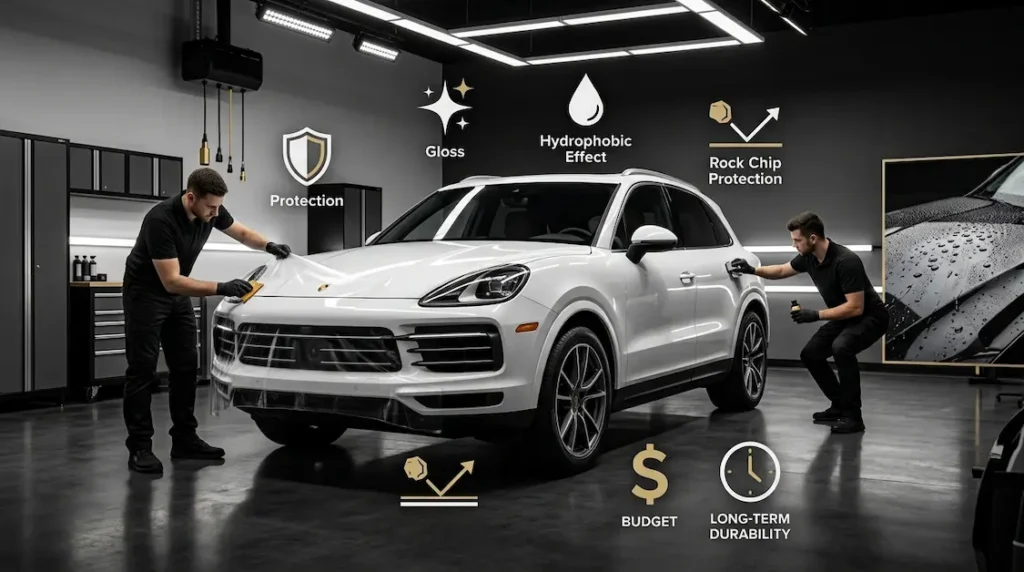
One of the most searched questions is:
Which is Best for a New Car?
The best time to protect your vehicle is before the paint gets damaged.
A brand-new car has a flawless factory finish. Once scratches, swirl marks, or Stone Chips appear, restoring the paint often requires Paint Correction and Car Polishing, which can never fully replace the originality of factory paint.
That is why many experts recommend installing protection as soon as possible.
Choose PPF if:
- You want maximum New Car Protection
- You frequently travel on motorways
- You own an expensive SUV or sedan
- You want protection against Rock Chips
- You plan to keep the vehicle for many years
Choose Ceramic Coating if:
- Your budget is limited
- You mainly drive in the city
- You want excellent Paint Gloss
- You prefer Easy Maintenance
- You want better Water Repellency
Expert Recommendation
At Nanolex Car Care, many new car owners choose Full Front Coverage using Paint Protection Film for the most vulnerable areas, followed by Professional Ceramic Coating over the remaining painted surfaces. This combination provides excellent Layered Protection, balancing physical defence with long-lasting shine.
Best Paint Protection for Luxury Cars
Luxury vehicles have expensive paint systems, making repairs and repainting costly.
If you own a:
- BMW
- Mercedes-Benz
- Audi
- Porsche
- Lexus
- Land Cruiser
- Range Rover
protecting the factory finish should be a priority.
Premium vehicles often lose resale value if panels are repainted, even after high-quality repairs. Preserving the Original Paint is one of the best ways to maintain the vehicle’s market value.
For luxury cars, Professional PPF Installation is generally the preferred choice because it provides superior Physical Protection while maintaining the factory appearance.
Adding Professional Ceramic Coating on top of the film further enhances:
- Paint Shine
- Gloss Enhancement
- Hydrophobic Finish
- Easy Cleaning
This combination offers both beauty and durability.
Best Paint Protection for Daily Drivers
If your car is used every day for commuting, your priorities are usually different.
Most daily drivers face:
- Dust
- Heavy traffic
- Frequent washing
- Parking scratches
- Sun exposure
- Pollution
For these vehicles, reducing maintenance time is often more important than maximum impact protection.
Ceramic Coating is usually the better choice if you:
- Drive mainly within the city
- Wash your vehicle regularly
- Want excellent Hydrophobic Coating
- Prefer easier cleaning
- Want long-lasting shine
The coating helps prevent dirt from sticking to the paint, making routine maintenance much easier.
However, if your daily commute includes long motorway journeys, adding PPF to high-impact areas can provide additional protection against Road Debris and Stone Chips.
Best Paint Protection for Budget Buyers
Many car owners believe protecting their vehicle is expensive.
However, the right choice depends on what you want to achieve.
If your goal is maximum protection against physical damage, PPF provides better value over the long term because it helps avoid costly repainting.
If your priority is appearance and easier maintenance, Ceramic Coating offers excellent performance at a lower initial cost.
Budget-conscious buyers often choose:
- Partial PPF on high-impact areas
- Ceramic Coating on the remaining painted surfaces
This approach keeps costs under control while protecting the areas most likely to suffer damage.
PPF vs Ceramic Coating Cost in Pakistan (2026)
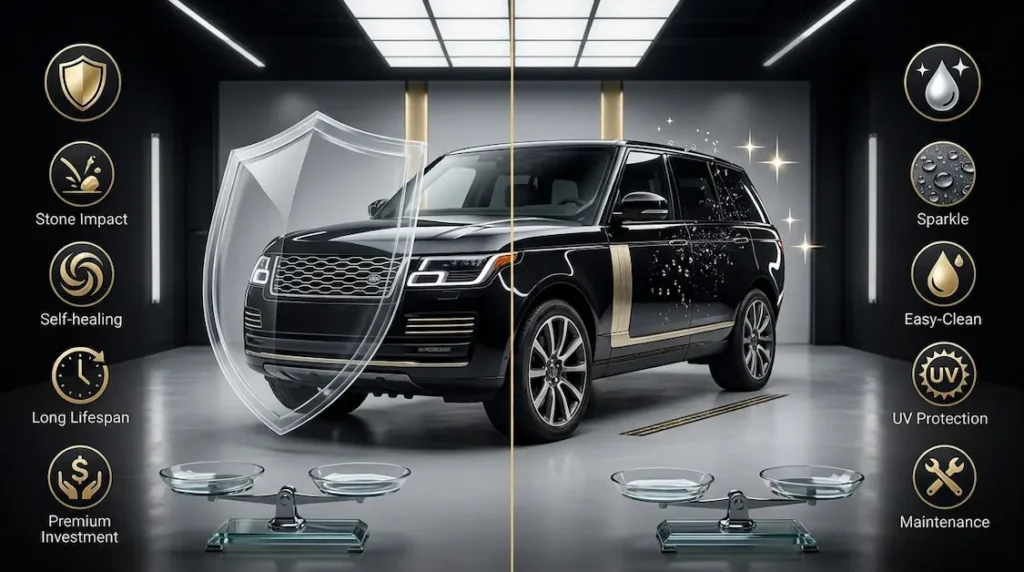
Cost is one of the most important factors when deciding between PPF vs Ceramic Coating in Pakistan. The cost of PPF vs Ceramic Coating depends on coverage, product quality, and installation expertise.
Factors That Affect the Cost:
- Vehicle size
- Brand of product
- Coverage area
- Installer’s experience
- Surface preparation required
Estimated Prices in Pakistan (2026)
| Service | Estimated Price (PKR) |
| Partial PPF Installation | 40,000 – 90,000 |
| Full Front Coverage PPF | 90,000 – 180,000 |
| Full-Body PPF | 250,000 – 700,000+ |
| Professional Ceramic Coating | 35,000 – 120,000 |
| Premium Multi-Layer Ceramic Coating | 70,000 – 180,000 |
Note: Prices vary depending on the vehicle model, paint condition, product quality, and installer. Contact Nanolex Car Care for an inspection and a customised quotation based on your vehicle.
Is PPF Better for Highway Driving?
Yes, in most cases.
Motorway and highway driving expose your vehicle to:
- Flying gravel
- Loose stones
- Road Debris
- Insects
- High-speed impacts
These hazards can quickly damage the front of your vehicle.
For people who regularly travel between cities, Paint Protection Film offers significantly better Impact Protection than Ceramic Coating.
The most important areas to protect include:
- Front Bumper
- Hood
- Side Mirrors
- Headlights
- Fog Lights
- Rocker Panels
Installing Full Front Coverage is often enough for drivers who spend a lot of time on highways.
Can You Apply Ceramic Coating Over PPF?
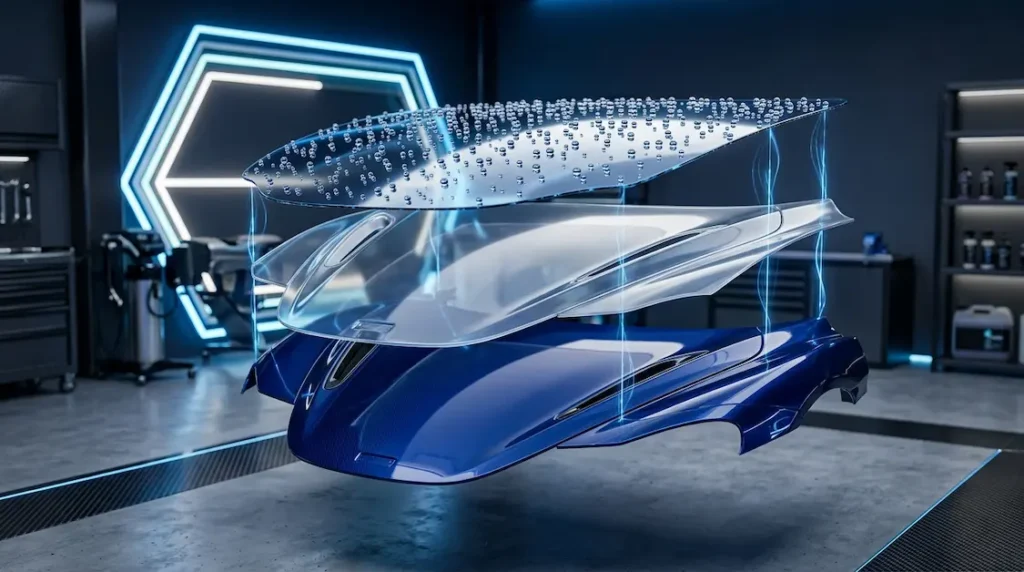
Yes.
This is actually one of the most recommended protection methods for premium vehicles.
Many people think they must choose between PPF and Ceramic Coating, but the two products work together extremely well.
How They Work Together
PPF provides:
- Physical Barrier
- Scratch Resistance
- Stone Chip Protection
- Self-Healing Technology
Ceramic Coating provides:
- Hydrophobic Properties
- Water Beading
- Deep Gloss
- Easy Maintenance
- Chemical resistance against environmental contaminants
Applying Ceramic Coating over Paint Protection Film improves the appearance of the film while making it easier to clean.
This combination is especially popular among owners of luxury vehicles who want the highest level of Whole Vehicle Protection.
A good example of this was a customer who visited Nanolex Car Care shortly after purchasing a new SUV. The owner initially planned to install only Ceramic Coating, but after learning that the vehicle would regularly travel on motorways, we recommended Full Front PPF for the high-impact areas and Ceramic Coating for the remaining painted surfaces.
This approach provided strong protection against Stone Chips and Road Debris while also improving gloss and making routine maintenance much easier. It is a practical example of how the right recommendation depends on the owner’s driving habits rather than choosing the same solution for every vehicle.
Is PPF Worth It in Pakistan?
Yes—especially if you drive frequently on highways, own a luxury vehicle, or want to preserve your car’s original factory paint.
Pakistan’s roads expose vehicles to:
- Dust
- Loose gravel
- Strong sunlight
- Construction debris
- Heavy traffic
These conditions increase the risk of paint damage.
Although PPF has a higher upfront cost, it can help reduce future expenses on repainting and paint repairs.
At Nanolex Car Care, we often recommend PPF for new and high-value vehicles because protecting the original paint can also improve Vehicle Resale Value.
Which Protection Offers Better Long-Term Value?
When comparing long-term ownership costs, think beyond the initial installation price.
Choose PPF if you want:
- Maximum Physical Protection
- Protection against Stone Chips
- Self-Healing Film
- Long-term Paint Preservation
- Better resale value
Choose Ceramic Coating if you want:
- Outstanding Paint Gloss
- Excellent Hydrophobic Finish
- Easier washing
- Lower maintenance
- Affordable long-term appearance enhancement
Choose Both if you want:
- Complete Vehicle Paint Protection
- Best possible appearance
- Maximum durability
- Protection from both physical and environmental damage
- Premium Layered Protection for years to come
Over the years, our team at Nanolex Car Care has worked on a wide variety of vehicles, from daily drivers and family SUVs to luxury sedans and imported models. One thing we have consistently learned is that there is no one-size-fits-all answer when comparing PPF vs Ceramic Coating.
The right Paint Protection Solution depends on how the vehicle is driven, the road conditions it faces, and the owner’s expectations. Customers who regularly travel on highways usually prioritise protection against Stone Chips, Road Debris, and minor impacts, making Paint Protection Film (PPF) the preferred choice.
On the other hand, city drivers often value easier maintenance, enhanced Paint Gloss, and long-lasting Hydrophobic Properties, making Professional Ceramic Coating a practical option. Based on our experience, understanding the customer’s driving habits before recommending any protection system always leads to the best long-term results.
Common Mistakes People Make When Choosing Paint Protection
Choosing the wrong Paint Protection Solution can lead to unnecessary expenses and disappointment. Many people buy based only on price or marketing claims without understanding how each product actually works.
Here are the most common mistakes to avoid.
1. Choosing Only Based on Price
Many buyers assume the cheapest option is the best value.
In reality, choosing protection should depend on:
- Your driving habits
- Vehicle type
- Budget
- Long-term ownership plans
- Road conditions
A luxury vehicle used on highways needs a different level of protection than a city-driven hatchback.
2. Believing Ceramic Coating is Scratch-Proof
One of the biggest myths is that Ceramic Coating makes a vehicle scratch-proof.
Although it improves Scratch Resistance against very light wash marks, it cannot stop deep scratches, keys, shopping trolleys, or Stone Chips.
If maximum Physical Protection is your goal, Paint Protection Film is the better option.
3. Ignoring Professional Installation
Even the highest-quality products can perform poorly if installed incorrectly.
Poor installation may result in:
- Air bubbles
- Visible edges
- Peeling film
- Uneven coating
- Reduced durability
For the best results, always choose experienced professionals who follow proper Surface Preparation, Paint Preparation, and installation procedures.
4. Skipping Paint Correction
Applying PPF or Ceramic Coating over damaged paint does not remove imperfections.
If the paint already contains:
- Swirl Marks
- Oxidation
- Water spots
- Light scratches
professional Paint Correction should be completed before installation to achieve the best finish.
5. Choosing the Wrong Package
Some owners purchase Full-Body PPF when they only need Full Front Coverage.
Others install only Ceramic Coating even though they frequently drive on motorways.
Selecting the right package saves money while providing the protection your vehicle actually needs.
Frequently Asked Questions
Before making your final decision, it’s natural to have a few questions about PPF vs Ceramic Coating. Below are answers to some of the most frequently asked questions from car owners in Pakistan, based on industry knowledge and the practical experience of the team at Nanolex Car Care.
Is PPF Worth It in Pakistan?
Yes. Is PPF Worth It? For many drivers in Pakistan, the answer is yes. Roads often contain loose gravel, construction debris, dust, and heavy traffic that can damage your vehicle’s paint. Paint Protection Film helps reduce the risk of Stone Chips, Road Debris, and minor scratches while preserving your Original Paint. At Nanolex Car Care, we generally recommend PPF for new cars, luxury vehicles, and anyone who regularly drives on highways.
What is the Disadvantage of PPF?
The main disadvantage of PPF is its higher initial cost compared to Ceramic Coating. Professional installation also requires skilled technicians to achieve the best results. However, when installed correctly, PPF provides outstanding long-term protection and may reduce future paint repair costs.
What is the Disadvantage of Ceramic Coating?
The biggest limitation of Ceramic Coating is that it does not protect against major physical damage. It cannot stop Stone Chips, deep scratches, or strong impacts. Its primary purpose is to improve gloss, provide Hydrophobic Properties, and make maintenance easier. At Nanolex Car Care, we explain these differences clearly so customers can choose the right solution based on their driving needs.
Is It Worth Putting Ceramic Coating on PPF?
Yes. Applying Ceramic Coating over Paint Protection Film is one of the best ways to achieve Combined Protection.
The PPF provides:
- Physical impact resistance
- Scratch protection
- Self-healing properties
The Ceramic Coating adds:
- Hydrophobic Coating
- Better Paint Gloss
- Easier washing
- Protection from environmental contaminants
This combination is especially beneficial for premium and high-value vehicles.
Which is Best, PPF or Ceramic?
There is no universal answer.
Choose PPF if your priority is:
- Stone Chip Protection
- Scratch resistance
- Highway driving
- Long-term physical protection
Choose Ceramic Coating if your priority is:
- High gloss
- Easy maintenance
- Water repellency
- Affordable protection
For the highest level of Vehicle Paint Protection, many professionals—including the team at Nanolex Car Care—recommend using both together.
How Long Does Car PPF Last?
High-quality Paint Protection Film typically lasts 5 to 10 years, depending on the film quality, installation, climate, and maintenance. Regular washing with a pH-Balanced Shampoo and proper care help maximise its lifespan.
Does Ceramic Coating Prevent Scratches?
Ceramic Coating can reduce minor wash marks and improve surface resistance, but it does not provide physical protection against deep scratches or stone chips. For stronger scratch and impact protection, PPF is the better choice.
Quick Comparison Summary
| Feature | PPF | Ceramic Coating |
| Best for Physical Protection | ✅ Excellent | ❌ Limited |
| Stone Chip Protection | ✅ Excellent | ❌ No |
| Self-Healing | ✅ Yes (Premium Films) | ❌ No |
| Hydrophobic Properties | Good | ✅ Excellent |
| Paint Gloss | Very Good | ✅ Excellent |
| Easy Cleaning | Very Good | ✅ Excellent |
| Highway Driving | ✅ Best Choice | Good |
| City Driving | Excellent | ✅ Excellent |
| Lifespan | 5–10 Years | 2–7 Years |
| Initial Cost | Higher | Lower |
Expert Tip
Before choosing any Paint Protection System, ask your installer about the product brand, warranty, expected lifespan, maintenance requirements, and the installation process. Even the best PPF or Ceramic Coating can fail if it is installed incorrectly. Choosing an experienced installer is just as important as choosing a high-quality product.
Final Verdict – PPF vs Ceramic Coating: Which One Should You Choose?
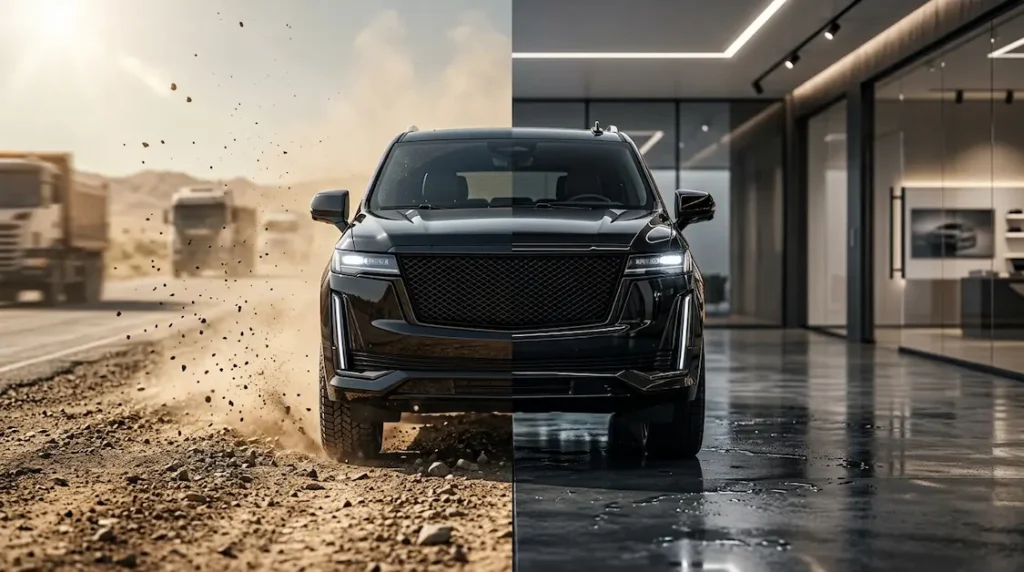
When comparing PPF vs Ceramic Coating, it is important to remember that these two products are not competitors—they are complementary Paint Protection Systems designed for different purposes.
If your priority is protecting your vehicle from Rock Chips, Stone Chips, scratches, and daily physical damage, Paint Protection Film (PPF) is the better choice. Its durable Protective Film, Self-Healing Technology, and excellent impact resistance make it ideal for new vehicles, luxury cars, and drivers who spend a lot of time on highways.
If your focus is achieving a stunning Mirror Finish, superior Paint Gloss, excellent Water Repellency, and easier maintenance, Ceramic Coating is an excellent investment. It enhances your vehicle’s appearance while providing reliable protection against UV rays, oxidation, bird droppings, and other environmental contaminants.
For many vehicle owners, the best solution is not choosing one over the other—it is combining both. Installing Paint Protection Film on high-impact areas and applying Ceramic Coating over the protected surfaces provides outstanding Layered Protection, helping preserve your vehicle’s appearance, value, and finish for years.
If you’re still unsure whether PPF or Ceramic Coating is right for your vehicle, the experts at Nanolex Car Care can inspect your car and recommend the most suitable paint protection solution based on your driving habits, budget, and long-term goals.


